
BLUF (Bottom Line Up Front)
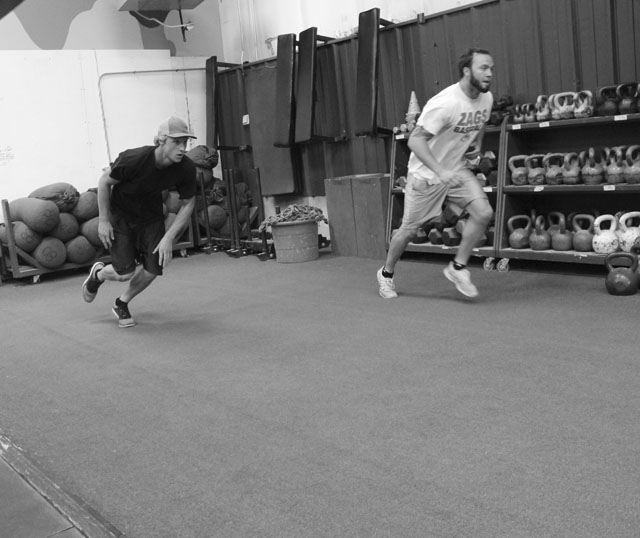
Two MTI athletes completed a 3-week shuttle sprint progression and improved performance in a short, multimodal work capacity assessment. Even with just five sprint sessions across the cycle, both athletes showed measurable improvement — Emmett cut 4 seconds, and Michael cut 10 seconds.
Background
Work capacity, as MTI defines it, includes submaximal physical effort that combines sprinting, muscular endurance, aerobic capacity, and mental fitness. Short shuttle sprints — especially 300m — are a staple of MTI programming due to their simplicity and transfer to tactical or mountain tasks under load and fatigue.
This study aimed to isolate the effect of a short, density-progressive 300m shuttle sprint protocol on performance in a standard MTI work capacity assessment:
3 Rounds for Time of:
-
5x Power Cleans @ 95#
-
5x Burpees
-
5x Box Jumps @ 20″
The shuttle progression was limited to just five sessions across three weeks, making this a time-efficient cycle to test. The question was whether such a short sprint-focused progression could improve output in a compound, total-body work capacity event.
This study builds on findings from a previous MTI mini-study that compared high-intensity interval training (HIIT) and sprints for work capacity development. In that trial, the sprint-only group (4x/week sprint intervals) demonstrated an average 16.6% improvement on this same assessment (view full study here).
Study Design
Participants
-
Emmett – Age 30, BW: 187
-
Michael – Age 24, BW: 180
Initial Assessment
3 Rounds for Time:
-
5x Power Cleans @ 95#
-
5x Burpees
-
5x 20” Box Jumps
Progression Protocol
-
Week 1: 5x 300m Shuttles @ every 2:30 (Wed, Fri)
-
Week 2: 5x 300m Shuttles – 2 sessions @ every 2:20 (Mon, Wed), 1 session @ every 2:10 (Fri)
-
Week 3: Final assessment only (Mon)
In total, five shuttle sprint sessions were completed before the retest.
Results
Work Capacity Performance – Current Sprint Group
| Athlete | Age | Bodyweight | Initial Time | Final Time | % Change |
|---|---|---|---|---|---|
| Emmett | 30 | 187 | 1:55 | 1:51 | –3.5% |
| Michael | 24 | 180 | 2:35 | 2:25 | –6.4% |
| Average | — | — | — | — | –4.95% |
Comparison Group – Previous Sprint-Only Mini-Study (4x/Week)
These athletes performed the same work capacity assessment pre- and post-cycle. Their progression included 4x/week of sprint intervals.
| Athlete | Age | BW | Initial Time | Final Time | % Change |
|---|---|---|---|---|---|
| Bill | 41 | 194 | 2:58 | 2:31 | –15.2% |
| David | 29 | 169 | 2:33 | 1:48 | –29.4% |
| Chris | 48 | 179 | 2:16 | 2:10 | –4.4% |
| Lou | 33 | 171 | 2:56 | 2:05 | –29.0% |
| Derek | 35 | 171 | 1:57 | 1:51 | –5.1% |
| Average | — | — | — | — | –16.6% |
Discussion
Even with only five shuttle sprint sessions spread across three weeks, both athletes were able to improve their performance in the same MTI work capacity assessment used in the prior mini study. The short cycle yielded a 3.5% improvement for Emmett and 6.4% for Michael, both without any direct practice of the assessment itself.
Compared to the previous group that ran 300m sprints four times per week and averaged a 16.6% improvement, this shorter protocol demonstrated lower but still positive effects. This suggests that a low-volume shuttle progression can still provide a meaningful training stimulus and is a viable option for athletes with limited time or competing demands.
Next Steps
-
Sprint Distance Comparison
Test progression using 300m shuttle sprints (25m down & back) vs 400m straight sprints to determine which better improves short work capacity performance. -
Event Progression Group
Create a group that trains the work capacity assessment itself using a progression model to compare whether event-specific training yields greater improvements than sprint intervals. -
Hybrid Progression Model
Run a trial combining both shuttle sprint intervals and event-specific progression to test for any additive performance benefits.
Questions, Feedback, Comments? Email coach@mtntactical.com